This website uses cookies so that we can provide you with the best user experience possible. Cookie information is stored in your browser and performs functions such as recognising you when you return to our website and helping our team to understand which sections of the website you find most interesting and useful.

Guided tours for groups
Use the button at the bottom of the page to request a tour for your group.
Group tour:
DUNGEONS
Medieval jurisdiction
Guided tours in the dungeon will only be provided by Nuremberg's Art and Cultural Education Centre [Kunst- und Kulturpädagogischen Zentrum],
phone +49 911 1331241
Group tour:
ART BUNKER
Unscathed by WWII
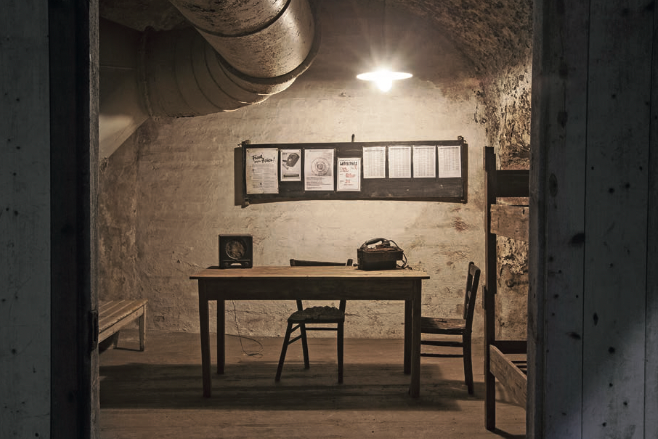
In the Second World War, Nuremberg sustained the most devastation of all cities in Germany after Dresden. Yet many of Nuremberg’s art treasures survived in a unique art bunker. After the war, the mediaeval old town was recreated out of the ruins. Find out how the art was saved and the city rebuilt.
- Date and time as required
- Duration: approximately 60 minutes
- Group price €90, other languages €100
- Maximum group size: 20 persons
- Languages: German, English, French
- Meeting point: Historic Art Bunker, Obere Schmiedgasse 52
- Request tour via email or mail form
- GTC and visitor regulations apply
- COVID advice
Group tour:
WEHR- & GEHEIMGÄNGE unter der Burg
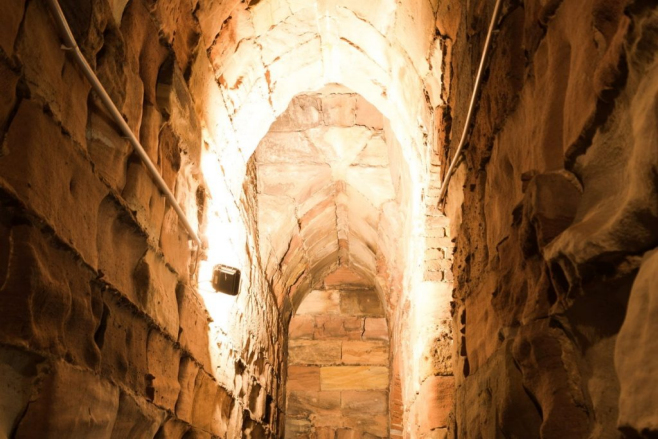
Deep within Nuremberg’s bastions, secret winding passages were built to defend the city. A labyrinth of metre-high casemates, the embrasures of which were used to fire at all angles across the moat. Fortifications that were never breached by the enemy and earned Nuremberg the reputation of being the best-protected city in the German Empire.
- Date and time as required
- Duration: approximately 60 minutes
- Group price €90, other languages €100
- Maximum group size: 15 persons
- Languages: German, English, French
- Meeting point: Historic Art Bunker, Obere Schmiedgasse 52
- Request tour via email or mail form
- GTC and visitor regulations apply
- COVID advice
Group tour:
NUCLEAR BUNKER Krebsgasse
Surviving World War 3?
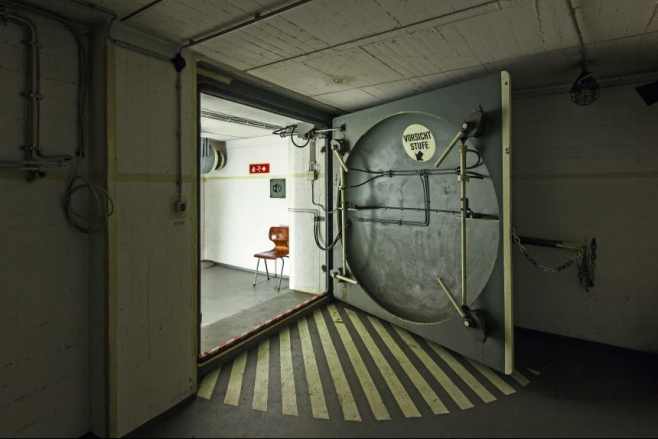
Five minutes to get into the bunker where there is air, water and light for 14 days. Shared with 2,000 fellow occupants, 8 hours lying down, 16 hours sitting. What were the prospects after two weeks? Emerging to face the fallout and destruction. The tour of the nuclear bunker, complete with original furnishings, focuses on the political crises in the Cold War, the technical facilities and routine life in the bunker.
- Date and time as required
- Duration: approximately 60 minutes
- Group price €90, other languages €100
- Maximum group size: 20 persons
- Languages: German, English
- Meeting point: Krebsgasse 10 (opposite the Britisch Empire store, street no. 7)
- Request tour via email or mail form
- GTC and visitor regulations apply
- COVID advice
Group tour:
NUCLEAR BUNKER Main train station
Surviving World War 3?
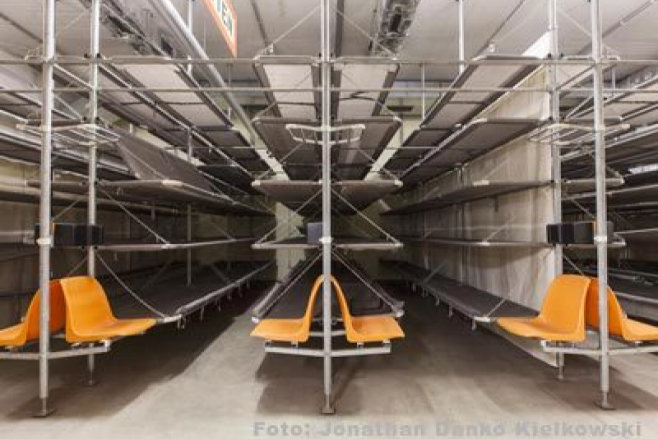
Passengers were to have the possibility of seeking shelter under the main train station.
During the construction of underground train line, the old air raid shelter was replaced by a nuclear bunker for approximately 4,000 people with facilities to remain underground for 14 days.
Currently, the bunker can only be visited as part of a pre-booked group guided tour.
- Date and time as required
- Duration: approximately 60 minutes
- Group price €90, other languages €100
- Maximum group size: 20 persons
- Languages: German, English
- Meeting point: at the Königstorpassage escalator in the central hall of the main train station
- Request tour via email or mail form
- GTC and visitor regulations apply
- COVID advice
Group tour:
Pit loo meets water well
Rock-cut water line
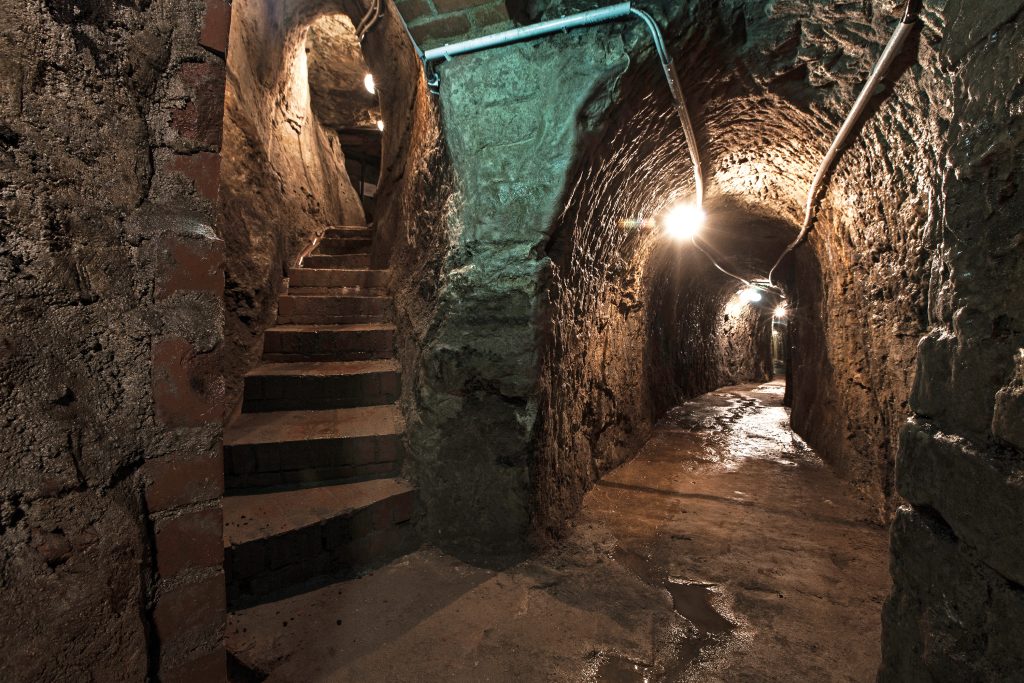
Water - vital for the existence of a city. Nuremberg’s citizens struck lucky deep within the castle rock. Wells and miles of tunnels were hewn into the sandstone, bearing testimony to the building expertise of the mediaeval engineers. Exploring these secret underground lifelines, we learn about the water supply and hygiene in Nuremberg of old.
- Date and time as required
- Duration: approximately 60 minutes
- Group price €90, other languages €100
- Maximum group size: 12 persons
- Languages: German, English, French
- Meeting point: Historic Art Bunker, Obere Schmiedgasse 52
- Request tour via email or mail form
- GTC and visitor regulations apply
- COVID advice
Group tour:
CITY WALL
Nuremberg's insurmountable wall
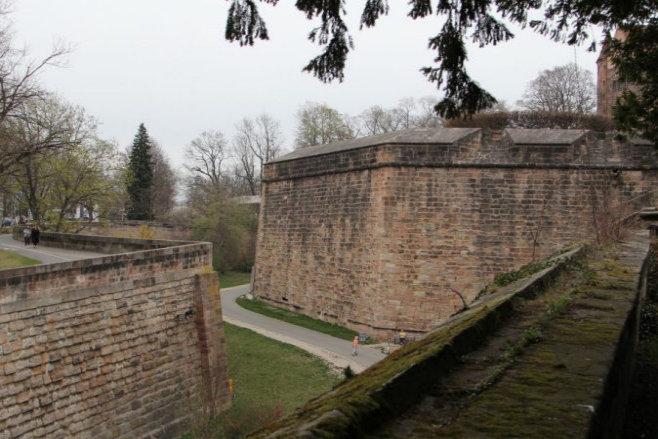
Wealthy cities have to protect themselves. Nuremberg was rich and has a long tradition of investing in its fortifications. For centuries, Nuremberg was one of the best-protected cities in Europe. The city wall tour explores
the defensive passages, both within the walls and on the battlements with wide views.
- Date and time as required
- Duration: approximately 90 minutes
- Gruppenpreis 120 Euro, andere Sprache 130 Euro
- Maximum group size: 15 persons
- Languages: German, English, French
- Meeting point: at the entrance to the Youth Hostel, Burg 2
- Request tour via email or mail form
- GTC and visitor regulations apply
- COVID advice
Group tour:
RUINED/REBUILT
Reconstructing Nuremberg
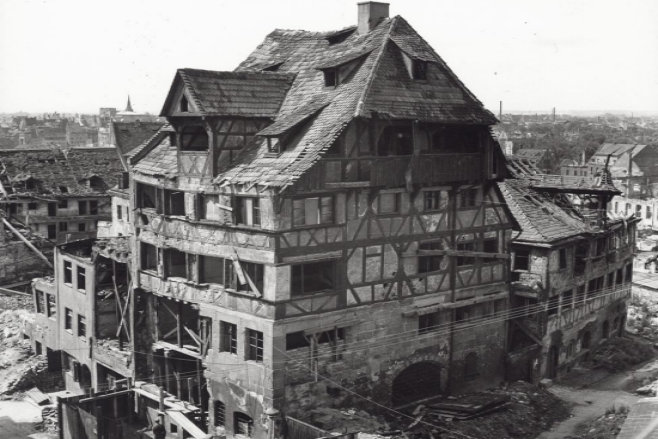
Die Altstadt Nürnbergs war nach dem 2. Weltkrieg zu mehr als 90% vernichtet. Warum und wie wurde Nürnberg derart zerstört? Und warum gibt es heute wieder ein mittelalterliches Stadtzentrum? Auf einem ober- und unterirdischen Spaziergang durch die Altstadt gehen wir diesen Fragen nach und zeigen exemplarisch die Rekonstruktion der Altstadt, die bis zum heutigen Tag andauert
- Date and time as required
- Duration: approximately 90 minutes
- Gruppenpreis 120 Euro, andere Sprache 130 Euro
- Maximum group size: 20 persons
- Languages: German
- Meeting point: Historic Art Bunker, Obere Schmiedgasse 52
- Request tour via email or mail form
- GTC and visitor regulations apply
- COVID advice